
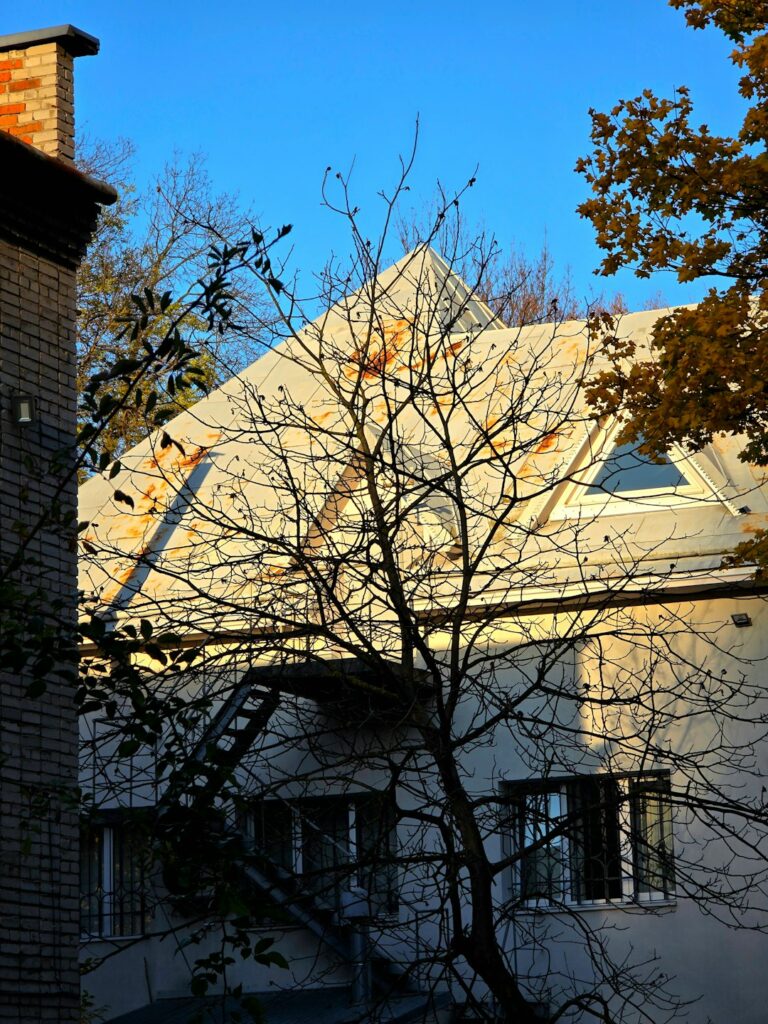
How can severe winds damage a roof?
Severe winds can damage a roof by lifting shingles, loosening flashing, breaking tree limbs, and pushing water beneath otherwise intact roofing materials. The most vulnerable areas are often roof edges, corners, ridges, valleys, vents, and locations where different materials meet.
In Slingerlands, NY, wind damage may occur during thunderstorms, strong cold fronts, remnants of tropical systems, and winter weather events. A roof does not need to lose large sections of shingles to develop a problem. A few lifted tabs or a loosened flashing joint can allow water to enter during the next rainfall.
Wind affects roofing in several ways:
- Direct pressure: Strong gusts press against shingles, flashing, vents, and gutters.
- Wind uplift: Air moving across a roof can create upward force, especially along exposed edges and corners.
- Debris impact: Branches, limbs, and airborne objects can crack shingles or puncture roof coverings.
- Water intrusion: Wind-driven rain can enter beneath lifted shingles, around flashing, or through damaged vent components.
- Progressive loosening: A shingle that has partially separated may become more vulnerable during the next storm.
Which parts of a roof are most vulnerable?
Roof edges and corners usually experience greater wind pressure than the broad center areas of a roof. Shingles near the eaves, rakes, ridges, and hips may loosen first if adhesive seals have weakened or if installation details are inadequate.
Other commonly affected components include:
- Ridge caps and hip caps
- Step flashing near walls and chimneys
- Pipe boots and other roof penetrations
- Skylight flashing
- Attic and roof vents
- Gutters, downspouts, and fascia
- Drip edges and exposed underlayment
Older roofs may be more susceptible because weathering can make shingles brittle, reduce the effectiveness of seal strips, and weaken fasteners. However, a newer roof can also sustain damage if it is struck by debris, exposed to unusually strong gusts, or affected by installation defects.
What does wind damage look like from the ground?
Some damage is visible without climbing onto the roof, but many problems are not. From the ground, look for missing shingles, uneven rows, exposed dark underlayment, displaced ridge caps, or sections that appear raised or curled.
After a severe wind event, also check for:
- Shingle pieces in the yard, driveway, or gutters
- Hanging or detached gutters
- Bent metal flashing
- Damaged vent covers
- Tree limbs resting on the roof
- Granules collecting unusually heavily near downspouts
- Water stains on ceilings or upper walls
- Damp insulation or musty odors in the attic
A roof can appear normal from the ground while still having lifted shingles. Wind may separate a shingle from its adhesive seal without removing it completely. That type of damage can be difficult to see until rain enters beneath the loosened material.
Can wind damage cause leaks later?
Yes. A roof may not leak during the storm that causes the damage. Water intrusion can develop later when rain is driven beneath a lifted shingle, enters a failed flashing joint, or reaches a puncture that was hidden by debris.
Delayed leaks are common because roofing assemblies contain several layers, including shingles or another outer covering, underlayment, roof decking, insulation, and interior finishes. Water may travel along rafters or roof decking before appearing as a ceiling stain.
A stain does not always identify the exact point of entry. The visible mark may be several feet away from the damaged roof area. For that reason, simply painting over a ceiling stain can conceal the symptom without correcting the source.
What should residents do immediately after a windstorm?
Begin with a ground-level inspection and avoid walking on the roof. Wet shingles, loose materials, hidden structural damage, and fallen branches can create serious fall hazards.

Useful first steps include:
1. Look around the property for missing roofing materials and fallen limbs.
2. Check attic spaces, if safely accessible, for daylight, damp insulation, dripping water, or new stains.
3. Place containers beneath active interior leaks and move furniture or electronics away from the area.
4. Photograph visible damage from the ground.
5. Keep people away from sagging ceilings, hanging materials, and downed electrical lines.
6. Use temporary protection only if it can be done safely from the ground or from a secure location.
Do not pull away attached shingles, cut into the roof, or climb onto a wet or damaged surface. If a ceiling is bulging from trapped water, stay clear of the area because the ceiling material may fail.
Does every missing shingle require a full roof replacement?
No. A small area of wind damage does not automatically mean the entire roof needs replacement. The appropriate response depends on the roof’s age, the number and location of damaged materials, the condition of surrounding shingles, the state of the underlayment and decking, and whether compatible replacement materials are available.
Localized repairs may be reasonable when damage is limited and the surrounding roof remains sound. More extensive work may be necessary when wind has affected multiple slopes, exposed the underlayment, damaged roof decking, or revealed widespread weathering.
A common misconception is that a roof is either completely fine or completely ruined. In practice, wind damage can range from a single displaced ridge cap to widespread loss of weather protection.
How do trees and nearby structures increase wind risk?
Trees can create both direct and indirect roofing hazards. A falling limb may puncture the roof, while smaller branches can scrape shingles or block drainage. Even without a direct impact, repeated movement from nearby branches can wear down roofing surfaces over time.
Roof sections near taller trees, open fields, broad driveways, or gaps between buildings may experience different wind patterns than sheltered areas. Detached structures, fences, and neighboring roofs can also redirect gusts and increase turbulence around roof edges.
After high winds, inspect trees for hanging limbs and split branches before approaching the roof. A damaged tree may remain unstable after the weather has cleared.
How can wind resistance be improved over time?
Wind resistance depends on more than the visible roofing material. Proper fastening, sealed shingle edges, secure ridge caps, sound roof decking, correctly installed flashing, and well-attached fascia all contribute to performance.
Routine maintenance can reduce vulnerability by addressing:
- Loose or deteriorated flashing
- Missing or damaged shingles
- Unsecured gutters and downspouts
- Decayed fascia or roof-edge boards
- Exposed fasteners
- Deteriorated pipe boots
- Tree limbs that overhang the roof
Attic ventilation also deserves attention. Ventilation does not prevent storm damage, but excessive heat and moisture in an attic can contribute to premature aging of roofing materials and roof decking.
Because wind damage can involve fall hazards, unstable trees, electrical risks, and hidden structural problems, a qualified roofing or building professional may be necessary when damage is extensive, difficult to reach, or associated with an active leak. Safety should take priority over documenting every detail personally.
What should be remembered after severe winds?
The most useful rule is simple: inspect promptly, but do not assume that visible damage tells the whole story. Missing shingles are obvious, while lifted edges, damaged flashing, and hidden punctures may only become apparent during later rain.
For area households, checking the roof after a major wind event, clearing debris from safe locations, monitoring ceilings and attic spaces, and addressing small defects before the next storm can help prevent a limited problem from becoming a larger one.
